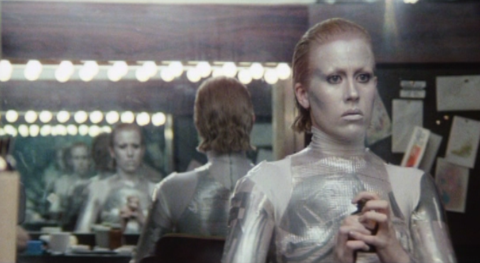
Danny (Phil Daniels) is trying to gain a foothold in the record industry by becoming a manager, but this is easier said than done as the best he can muster is getting paid to buy singles to fix their chart positions for a record company in London. Undeterred, he tries to gatecrash an event for industry people in an attempt to get some solid contacts there, but the security throws him out onto the street where he happens to notice a young woman pasting up posters for her own gigs on the walls. She is Kate (Hazel O'Connor) and is also seeking a way into the business, so after she and Danny get to chatting they begin to think they could be mutually beneficial...
A Dodi Fayed production (really), Breaking Glass - the name of Kate's eventual band rather than a reference to the Nick Lowe song which is nowhere to be heard here - was your basic showbiz rags to riches to despair tale, which as many highlighted at the time was doing very little new plotwise that hadn't been done over and over again in previous efforts. Apparently counting on the fact that their target audience would not have been familiar with such tropes, the production set about the clichés with gay abandon, or rather bloody miserable abandon as the audience, never mind the characters, had to be put through the wringer of depression and disillusionment to emerge from the other side older yet wiser.
Except for Kate, who emerges hopelessly damaged, just to see us off with a morose ending as befitting the social realism in British drama of the day, unless you watched the American version, which cut out all that business and settled for making her sell-out (in more ways than one) concert a triumphant finale to leave us with a spring in our step. Hazel O'Connor was that rising star, a renaissance woman who not only acted the leading role but sang the songs which she had penned herself, and in a cruel irony her experience with the music industry and resulting fame sent her off the rails in real life as well, leaving her with a cult following when she could have been a bigger star. Her strident style with the vocals was suited to the New Wave she was part of, yet not everyone got along with it.
Indeed, there were those totally turned off by the angst-ridden effects of Breaking Glass, and it did help to appreciate the tunes - including the hits Eighth Day and the more contemplative Will You - if you were going to enjoy it, if "enjoy" was the right word. The aim appeared to be to make you think, wow, 1984 is coming and we're headed for a fascist state where self-expression is regulated by money-grabbing corporations and both young and old are embracing a totalitarian society where any dissenting voices will be met with violence. True enough, this was the feeling of many at the time, which makes the film positively scream 1980: it couldn't have been released at any other point in history, and could only have summed up that year even better if it had climaxed with a nuclear bomb going off. Even so, much of what we see of Fatcher's Britain looks well nigh post-apocalyptic.
Kate's journey to the shattered shell she concludes as sees her an idealistic singer/songwriter who Danny assembles a band for - there are a few humorous moments, contrary to the film's dour reputation, such as the auditions process (Jonathan Pryce plays a mean sax). After playing a few pubs where fights erupt, she wishes for a big break, which she gets when the record company Danny was buying for offers her a contract, though even that is a hard fought battle. Everything is a struggle here, and the rewards are hardly worth the effort, from getting harrassed by the police for standing up for themsleves against the far right troublemakers to playing a left wing rally-turned riot only for a youth to die right in front of Kate, catalysing her trauma. In fact, so relentlessly downbeat is the tone that director Brian Gibson veered close to self-parody, such was the accumulation of scene after scene of Kate's breakdown surrounded by the general air of modern life being hopelessly rubbish. Still, Breaking Glass did sustain more than a few striking images and sounds, the latter helped by Tony Visconti producing.