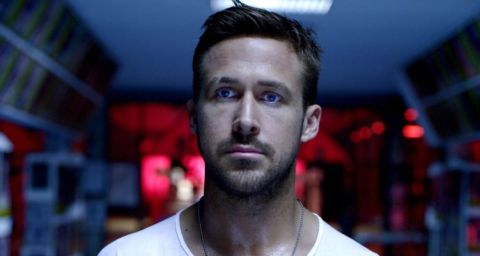
In the criminal underworld of Bangkok American expat Julian (Ryan Gosling) makes a living somewhere near the top of the tree, running kickboxing matches and making a tidy profit from that as well as the drugs money he rakes in from his other interests. But he has a brother who is far less in control, Billy (Tom Burke), who tonight after attending a match goes looking for a prostitute, ending up at a club where he has his pick of a collection of women, though he asks for the owner's daughter instead. That doesn't go down well, and neither does his subsequent rampage when he smashes a bottle over the owner and drags away one of the prostitutes...
After Nicolas Winding Refn and Ryan Gosling teamed up for the cult hit Drive, with all its affected cool and detachment occasionally bursting into life in brutal violence, you would have thought they could do no wrong when they reteamed for Only God Forgives, which was the wacky comedy version of that previous film. Well, not really comedy, but by this point there was already a strong flavour of self-parody emerging in their collaboration as this hit all the beats Drive had done but with far less appeal; maybe it was the lack of car chases, maybe it was the different location, maybe it was down to Refn having something spiritual to say through a simple gangster tale, but fewer embraced this.
According to the director's soundbite quote on his movie, Drive had been the equivalent of experiencing high quality cocaine, so this was its counterpart, like taking excellent acid. There was a problem in a nutshell, that supposed cool disappearing into purest self-indulgence, so far that it meant very little except to the Refn and Gosling diehards, though even some of them were let down here. Coming on like a simple revenge yarn as Julian feels he has to seek vengeance when Billy is murdered, the complications ensue when it turns out the brother was killed in return for raping and slaughtering a sixteen-year-old girl, which makes Julian side with a complete lowlife.
Cue moral dilemma, but the retired police inspector Chang (Vithaya Pansringarm) brought in to investigate was apparently intended as a figure of reckoning, no less than God Almighty Himself. If that sounds high-falutin', it might have offered food for (obscure) thought but with every scene approached the same way the effect was less the Alejandro Jodorowsky tribute as indicated by the dedication in the end credits, and more a slavish imitation of the worst excesses of Gaspar Noe, who by no coincidence is also thanked at the end. The whole notion that the only message worth listening to is one backed by force, aggression and violence was a pernicious one which was only bolstered by Refn's efforts here, suggesting if he was sincere about the theology, he was barking up the wrong tree.
Julian believes he can make amends with his tortured soul by taking on Chang, i.e. God, and if not winning at least achieving a draw, an ambition which at least gives rise to a spot of humour in the martial arts showdown, though you'd be hard pressed to find laughs or any self-awareness otherwise. That was unless we were supposed to find a foulmouthed Kristin Scott Thomas amusing as she played Julian's mother, showing up in Bangkok to ensure her son bumps off those responsible for Billy's death and suggesting a few problems with women if she was the film's idea of a strong female, with the sole other one of note another prostitute, Mai (Thai singer Yayaying Rhatha Phongam) who has the privilege of masturbating for the camera and being bullied by Julian and his mother. You could point to the oppressive atmosphere, with its sleek photography and Cliff Martinez's score, as a success in itself, but as it sought to appeal the drug-fuelled poseurs of this world Only God Forgives illustrated too many deadening flaws in its modern, redundant, rogue warrior posturing.