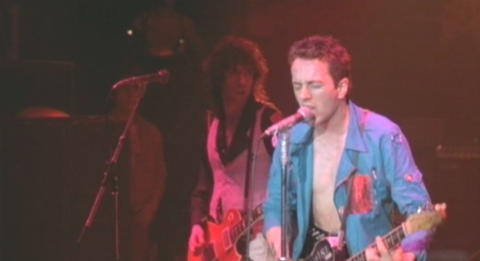
Ray Gange (playing himself) is a disaffected youth who lives in a rundown, graffiti-covered tower block in inner city London. Today he notices from one of the windows a Royal visit driving by, with some crowds cheering; unimpressed, Ray continues down the stairs and off to his job working behind the counter of a Soho sex shop where he has to deal with furtive perverts asking for "anything stronger" from the back of the establishment. Is it any wonder, with Britain divided by class and race and poverty that he feels adrift and is flirting with the extreme right wing whose aggressive politics speak to him. But then there's a new band, The Clash (as themselves), who preach from the left just as emphatically...
A mixture of concert performances, scripted and improvised scenes, this overlong film is worth seeing for its bleak and grim portrayal of late seventies Britain, as much a product of the period as the early music of the band it portrayed. Ray Gange had a hand in the script, yet for reasons best known to himself appeared as hardly a likeable character who is drawn to the National Front and is only out for himself (and not doing too well at that), apparently he was a lot nicer in real life yet you feel he might have shot himself in the foot for his future movie prospects by showing up here as such a reactionary lunkhead who gradually becomes a slave to the bottle, about the most convincing bit of acting he was able to muster as you could tell he was an amateur.
But the alternative to Gange, the character, and his far right leanings were shown to be the Clash's none-too-impressive left leanings, with Joe Strummer in particular failing to explain his politics at all convincingly. This was odd for a punk rock group for whom seemingly more than any of their peers politics was deeply felt and incredibly important, but all we got to counter Ray's racist ramblings were mumbled excuses and tentative endorsement of the socialist values that were being swept aside by fringe opinions and mainstream alike. Not for nothing was a fairly substantial part of a speech by Prime Minister Margaret Thatcher used, from the point just before her Conservative Party were elected and saw to it that traditional left wing politics were all at sea for decades.
Apparently the Clash weren't too happy with the way this film turned out, whether that was because it is clear they were no actors or were unhappy about the muffled message put across, or simply down to the fact it was, if you were honest, something of a mess pulling in a variety of directions which to all appearances was not even completed properly, is for them to know. It was true that punk rock united angry young men both working class and middle (like Joe Strummer) who wanted someone to just yell about the desperation the decade of the seventies had collapsed into, but were they interested in the message making of The Clash or were they enjoying the chance to leap around and shout (and spit) unfettered by the niceties of a polite society that had well and truly let them down?
After all, Sham 69 were doing much the same thing except they attracted a far more fascistic following by The Clash, no matter that their lead singer Jimmy Pursey was to be seen at a Rock Against Racism rally joining his rivals and idols onstage (except in some versions you can't hear him, and in others his vocals have been redubbed apparently because they were so poor - bad luck, Jimmy). If you were looking for some kind of guidance through life then you'd be hard pressed to find it here, with halfhearted rebellious nods such as the court case brought against the band for shooting some bloke's pigeons which takes up a ridiculous amount of the "plot" and a late on endorsement of British blacks who were harassed by the police, thus explaining the impetus for the riots Strummer wanted a white version of in his first hit. Rude Boy wouldn't be much more satisfying than the Sex Pistols' misbegotten movie from the same time except the concert footage ("Get off the fucking stage!") was more impressive in this instance and captured The Clash's appeal.
British documentary maker best known for The Clash’s Rude Boy. Other films include A Bigger Splash, about artist David Hockney, and the bizarre comedy Comic Act.
David Mingay ( - )
British director who usually worked with Jack Hazan. Films include the Clash documentary Rude Boy, Sophisticated Lady, about jazz singer Adelaide Hall, and Comic Act.