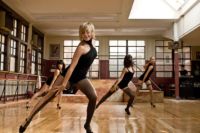
The New York School for Performing Arts have started auditions for yet another year and the would-be students are lining up with their hopes of admittance. Among them is Neil (Paul Iacono) who dreams of being a director, but wants to take acting classes to understand more about his craft - he does Robert De Niro's most famous scene from Taxi Driver which somehow impresses teacher Mr Dowd (Charles S. Dutton). Also lining up is pianist Denise (Naturi Naughton), a prodigy who easily gains a place with her skillful playing, and Jenny (Kay Panabaker), who wants to act as well, and delivers a heartfelt monologue that wins over the teachers...
That last girl was apparently the most important one, because after a while what should have been an ensemble cast looks to be playing second fiddle to Miss Panabaker: how unlike the original version of Fame, which allowed each character their place in the sun. If it wasn't her that you came away remembering, it was Miss Naughton, as she acts as a counterpoint to Jenny's ambitions, as they both find what they are good at, have their scrapes while trying to get a hold on that first rung of the ladder to success, and finally reassure us that they are going to do just fine. In fact, here you get the impression everyone is going to do just fine.
On the surface this remake might have had the grit of the original, but it was too softhearted to allow everyone to leave thinking practically nobody will make it in the business we call show, so the realism that director Kevin Tancharoen could have opted for is noticeably watered down. His film was criticised for this glossier approach in regard to Alan Parker's first version, not least by Parker himself, but perhaps he was simply reflecting the times, where almost everyone would like to be famous for the right reasons, without acknowledging that for most it wasn't going to happen. Therefore this was more a fictional variation on the talent shows which clogged up the television schedules of the 21st Century.
Appearances apart, there are other people than Panabaker in this, and nobody really disgraces themselves as far as acting goes, or even in their character's vocations. There is no one in this playing a role that had been in the original, so there's no Bruno, Doris or Leroy - and how this film needs a Leroy - rather screenwriter Allison Burnett picked parts of the basic personailties and storylines from before and adapted them to fresh characters. Debbie Allen, the teacher from the first film and television series, is the only player to appear in all three incarnations, but it's that small screen hit that this effort most resembles. It's more like a condensed season of TV than a movie with something to say about society.
Sounds pretentious, but Parker was keen to illustrate how the school represented people of all backgrounds and races brought together in the name of entertainment, and how liberating that was for the world's communities, or New York's at any rate: it was democracy in action. Here, however, self-expression is still liberating but it's more likely to be channelled into getting a job in the business as paying the bills is more important than creativity on a grand scale, or even a personally fulfilling one. About two thirds of the way through the students hit a bump and face up to failure, with one of their teachers (Megan Mullally) admitting that she is only tutoring because she didn't get the right chances elsewhere, but in spite of a potential suicide scene played far more seriously than in its source, this is all about bolstering faith in the entertainment industry. Nothing wrong with that, we all need to be entertained, yet the feeling in this Fame is nice try, but it's not half as inspiring as it intends to be. Music by Mark Isham.




 Display comments