| |
See No Evil
|
|
| Year: |
1971
|
|
Director: |
Richard Fleischer
|
| Stars: |
Mia Farrow, Dorothy Alison, Robin Bailey, Diane Grayson, Brian Rawlinson, Norman Eshley, Paul Nicholas, Christopher Matthews, Max Faulkner, Scott Fredericks, Reg Harding, Lila Kaye, Barrie Houghton, Michael Elphick, Donald Bisset
|
| Genre: |
Horror, Thriller |
| Rating: |
  7 (from 1 vote) 7 (from 1 vote) |
| Review: |
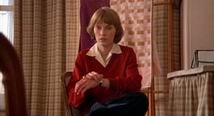
Sarah (Mia Farrow) has recently been blinded in a riding accident and is now returning to the country house of her aunt and uncle so she can recuperate before she has to get on with her life as best we can. She is met at the railway station of the nearby village and taken by car to the mansion where she tries not to act as a burden, but her relations can sense an awkwardness in her. She is sleeping in the bedroom of her cousin Sandy (Diane Grayson) and when she asks Sarah what it's like to be blind, she admits, "Bloody awful!" But it's about to get a whole lot worse...
See No Evil, or Blind Terror as it was alternatively known, was scripted by Brian Clemens and could be seen as part of his cycle of thrillers and horror movies of the seventies, but what it's most like is an episode of his celebrated television series of that decade, Thriller, for which he wrote a host of stories, all similar in tone to this. So apart from being a feature-length version of T.V. instalments, how does it stand up in its own right? The answer was, very well, as one of the particularly individual to this time type of British suspense pieces it held its ground.
Of course, the "brave blind lady in peril" plot could have begged comparisons to an earlier thriller, Wait Until Dark with Audrey Hepburn, but while this is just as absorbing, Sarah here is more victim than fighter. Director Richard Fleischer keeps the killer's face offscreen for much of the film, leaving us as much in the dark of his identity as Sarah is, but we know he's around because we recognise his distinctive cowboy boots, each emblazoned with a star. So when Sarah returns home to what she thinks is an empty house, after a day out with old boyfriend Steve (Norman Eshley), she is unaware that a terrible crime has been committed.
While she has been away, the killer, who appears to have some kind of grudge against the family for reasons which remain obscure, has massacred the three of them and the gardener and has then dropped off to sleep in the house. This means Sarah gets back, goes up to the bedroom and drifts off herself, not seeing as we do that Sandy is lying dead in the bed beside her's. Not even when she wakes up the next day and is taken out horseriding first thing by Steve does she twig that anything is wrong, though when she gets back Clemens realises he cannot spin out this part any longer and she finds her dead uncle in the bath.
Undertandably distressed, she discovers that she's not alone, that whoever is there has cut the telephone cord, and that the gardener is clinging to life. It is he who points Sarah in the direction of the bracelet, which carries the name of the killer, lying on the hall carpet, and once she grabs it she has her evidence of the murderer's identity. And all this is just in the first half, as Sarah really gets put through the mill in her efforts to get away with her life, so much so that it's easy to accuse the filmmakers of sadism, especially when dealing with an actress with as vulnerable a persona as Farrow. If you can take the main character's suffering, then you'll enjoy a tense example of a sturdy thriller, where misdirection is the order of the day, even playing on possible audience prejudice. All in all, the film succeeds in what it sets out to do. Music by Elmer Bernstein.
|
| Reviewer: |
Graeme Clark
|
| |
|
| Richard Fleischer (1916 - 2006)
American director whose Hollywood career spanned five decades. The son of famed animator Max Fleischer, he started directing in the forties, and went on to deliver some stylish B-movies such as Armored Car Robbery and Narrow Margin. His big break arrived with Disney's hit live action epic, 20,000 Leagues under the Sea, and which he followed up with such films as The Vikings, Compulsion, Fantastic Voyage, The Boston Strangler, true crime story 10 Rillington Place, See No Evil, cult favourite Soylent Green, Mister Majestyk, Amityville 3-D and sequel Conan the Destroyer. He became unfairly well known for his critical flops, too, thanks to Doctor Dolittle, Che!, Mandingo, The Jazz Singer remake, Red Sonja and Million Dollar Mystery, some of which gained campy cult followings, but nevertheless left a solid filmography to be proud of. |

|
|


