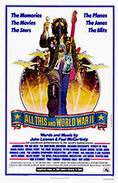
To the strains of the Beatles song "Magical Mystery Tour" but not performed by them as Ambrosia are doing it instead, the footage begins, scenes of the nineteen-thirties in Nazi Germany where Adolf Hitler is amassing his forces. World War II is brewing, and before you know what's happening, the Nazis are advancing across Europe and the battles have begun... and set to the music of the most famous band ever to emerge from Britain. But only in cover version form.
If that sounds like a stupid idea, I don't know if setting the war footage to the originals would have been any better. As a way to sell a compilation album, there have been more inspired notions, but few as strange and likely to prompt the pressing question, "What were they thinking?" Sticking with newsreels sprinkled with the odd bit of contemporary film, as well as movie clips made after when there's a frustrating lack of newsreel to go around, All This and World War II is one long montage, and needless to say the songs are not really performed more satisfyingly than the Fab Four did originally.
At times the connections between the tunes and what they're paired with are crushingly obvious, to say the least. Hitler is "The Fool on the Hill", as Helen Reddy tells us, and Benito Mussolini, later on when things aren't going his way, is the "Nowhere Man" according to Jeff Lynne. Is Leo Sayer's rendering of "The Long and Winding Road" improved any by the booms of shells exploding and bombs falling? Is "Sun King" trilled by the Bee Gees as the Japanese aeroplanes fly to Pearl Harbor in poor taste? Come to think of it, how does any of this ennoble the fighting of those six years?
Well, it doesn't really, and the producers apparently believed that the Beatles' sounds would be more fittingly presented with plaintive strings and self-important brass at every turn. Elton John's "Lucy in the Sky with Diamonds" is probably the most recognisable cover here, but even that is somewhat lacklustre, despite having John Lennon on guitar. Mainly you cringe at the choices of artists, whether it's Frankie Valli giving us his "A Day in the Life" or an act that must have been pretty obscure even then belting out yet another number.
If you didn't know much about World War II, then I'm not sure how helpful this film would be, as events fly by as if to pack in as much of the history as possible. However, the most glaring omission has to be the utter lack of mention of the Holocaust: perhaps even this project thought it too much of a stretch to enhance concentration camp images with Lennon and Paul McCartney songs? But why Lennon and McCartney at all? They didn't have any obvious connection to the tragedies, but maybe as the Beatles were meaningful to the younger generation of the day, it was hoped that their music would attract them to the significance of the Second World War. In effect, it's misguided at best, yet strangely compelling.