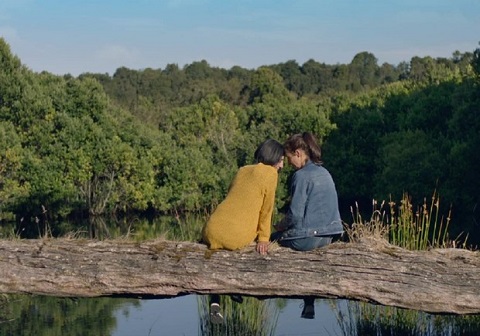
Ana (Amparo Noguera) and Maria (Julieta Figueroa) are a couple facing a crisis, as Maria has a terminal illness and they will be finally torn apart by this diagnosis, with its inevitable death for its conclusion. She has decided she would like to die in the tranquil surroundings of the forest, so they rent a cabin there and move in, nurse Ana using her professional skills to look after her best she can. One day, they are in the car when Maria asks her partner to close her eyes while driving: she will guide her. She does so, and her confidence in her manages to allow the incident to pass safely, but the fact remains, there will come a time when Ana will not have that comfort of a companion to help her through the day...
Argentinian writer and director Jose Luis Torres Leiva brought this contemplative drama to the screen as an examination of impending loneliness, a solitude we must all face if we live long enough and those we have shared our lives with die before we do. Even then, there was a sense that if you do go first, more loneliness awaits since if there is an afterlife, you will not be with your loved ones and friends there, no matter if they eventually pass over to the other side or not. If that sounds depressing, in fact the impression was that it was not supposed to be, and that melancholy that accompanies the demise of anyone who had value was actually a beautiful thing to be treasured, purely because we all mattered once.
Leiva was not above getting all metaphorical on the audience, however, and there were a number of passages where you felt you were being asked to puzzle out his messages and themes in visual style - nobody says very much in this one, and what is said is there to be read between the lines as to its meaning. Therefore there were not one but two dream sequences (if indeed they were dreams) where the ladies relate tales to one another, the first being a variation on The Wild Child, the film about the boy who was found living in the woods having apparently been brought up by nature. In the telling here, it was a teenage girl who was the feral kid, doted over by an elderly lady until she decides she would rather be smearing herself in mud during a rainstorm (again, it's symbolic!).
The second of these extended anecdotes involves a relative who was out in the woods (all those trees evidently represent plenty in this) having indulged in a spot of private nudism when he notices a younger man swimming in the pool nearby. He is starkers too, and though they dress, that clobber is whipped off again quick as you like (or as they like) when they opt for the pleasures of the flesh under the forest canopy. That story was a little more difficult to perceive as relevant to the couple's dilemma but pursued the gay interest that you had to assume was going to make up much of the target audience, no matter the subject of death was universal so really should have been relevant to us all. That was an issue, the arthouse aspect was going to limit the film's appeal, especially in the director's oblique, allusive technique, but maybe he did not make it for all of us who experience the Grim Reaper, merely a small subset who see it as a mixture of the spiritual and the interpersonal. Whichever, it did leave you in a peaceful frame of mind, and with ample reassurance that life goes on, just not for you. It was not a horror movie, despite that title.