Alma (Ginger Gilmartin) has suffered from schizophrenia for some years now, in and out of therapy and institutions and by this point she has had enough and decided to retreat from life to spend her days in a remote cabin in the woods, away from the rest of civilisation. But the more she tries to be alone, the more attentions she receives, for her sister Elizabeth (Mary Buss) has arrived and is staying with her, their relationship since their childhood some decades ago being a troubled one, not least because Elizabeth believes she can help her sibling in her mental health difficulties when her presence in what is really a holiday home may be more trouble than it's worth. But someone else shows up too - urbane Wesley, who may be a vampire.
A what? Sorry to drop that on you out of the blue, but what appeared to be a chamber drama from the opening gradually (or maybe not that gradually) transformed into a horror movie by the addition of this ageing bloodsucker. Writer (with John Selvidge) and director Mickey Reece had been in the business for years before he made this, churning out tens of long shorts and short features, not all of them with horror or fantasy themes, but proving persistence can pay off, Climate of the Hunter was the movie that began to gain traction and get him noticed. His allusive style meant you could sit watching this playing "spot the reference" with his influences, but the best way to describe it was akin to vampire soap Dark Shadows crossed with Rainer Werner Fassbinder.
Which meant, you guessed it, acres of talk, as these were characters who in lieu of any substantial budget to dress up the plot in fancy visual effects or makeup, preferred to thrash out their many issues with one another in conversation - or they do until they reach the limits of communication and instead resort to more drastic action. To be honest, if Reece had that budget it would have kind of spoiled his low resource vision, for adapting to what was available offered the film its own distinctive personality, no matter how often there were references to past cult properties (and even Scott Walker's only eighties album in the title, oddly). The waspish, damaging barbs and reactions the characters engendered were pure Fassbinder, but so was the habit of simply having the cast, for example, sit around a dinner table blethering so densely that you were not able to completely pick out every nuance from their connections.
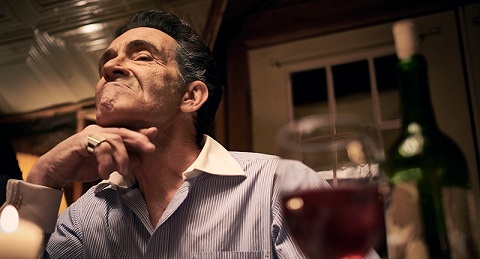
Wesley fancies himself quite the raconteur, but while he may have been studying chat show appearances of David Niven or Peter Ustinov, there's something verging on the crude about him that he does not quite cover up with his manners - we're introduced to his anecdotage as he relates a tale of a priest who lost his faith after an ill-timed fart, rather than any supernatural intervention a la The Exorcist for instance. But he has a son, Percy (Sheridan McMichael) who resents him for abandoning his catatonic, cosmetic surgery disaster mother (Laurie Cummings) in a care home, and latterly another younger cast member, Danielle Evon Ploeger, played Alma's equally resentful daughter who appears to also be present to provide some crowbarred-in nudity in nineteen-seventies fashion. It wasn't clear when this was set, but the seventies were a safe bet, looking at the food they eat (prominently featured in another eccentricity of presentation), the fashions and the lack of mobile phones, but being difficult to pin down was one of the defining characteristics as we watch this lot tear one another apart emotionally, leading to a cosmic finale. Music Nicholas Poss.