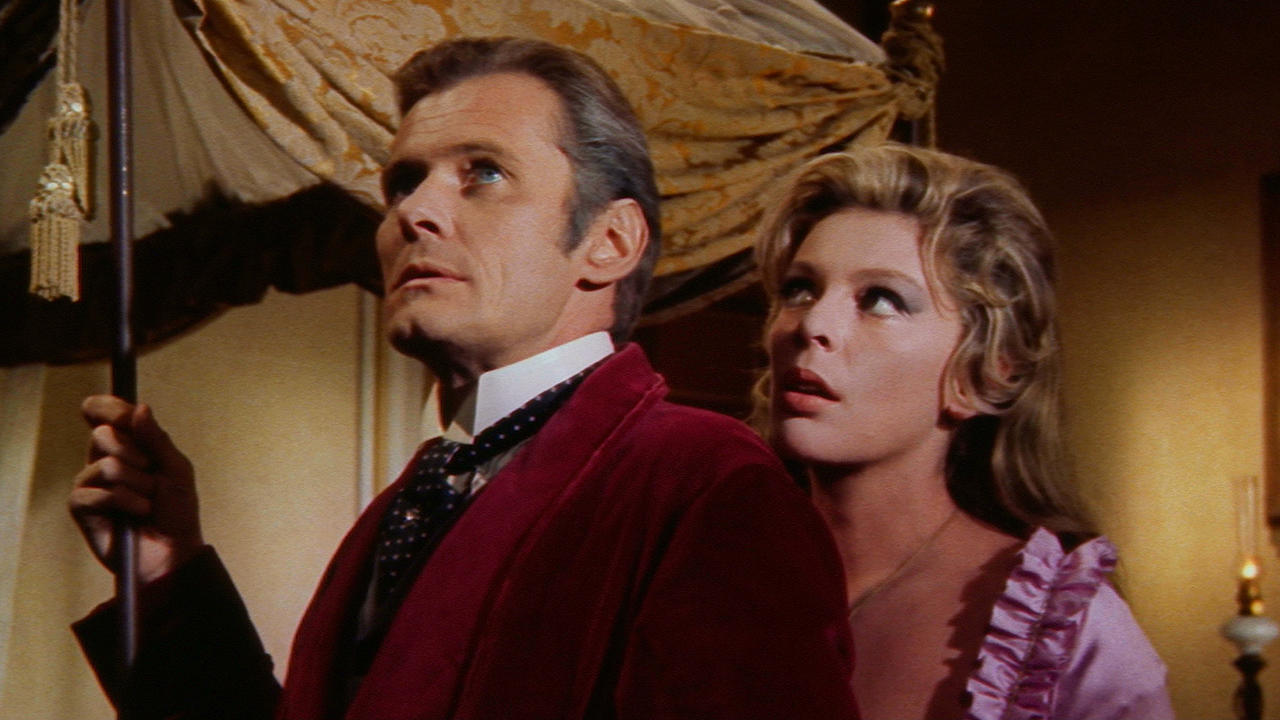
In 1870 rural England kindly nurse Mary (Barbara Wilson) discovers a razor-wielding maniac is running amuck at a mental health clinic run by brooding and mysterious Dr. Robert Vance (William Berger). When poor mute patient Janey (Anna Maria Polani) becomes the latest victim, Dr. Vance discreetly buries her body in the woods. Not realizing he is being watched by Gisèle de Brantome (Françoise Prévost), an aristocrat stranded in the woods after coincidentally offing her own abusive spouse. The next morning Gisèle feigns ignorance, with blackmail in mind. She accompanies Dr. Vance to the clinic to meet his wife Lizabeth (Mary Young). Unfortunately her arrival coincides with a fresh spate of murders. Is Vance the killer? Or maybe Ivan (Germano Longo) the hulking, horny handyman? Fred (Massimo Righi) the self-loathing schizophrenic? Or could it be someone else entirely?
Back in 1966 the rules for a giallo were not yet set in stone. So an Italian horror-thriller could be a stalk and slash fest like Mario Bava’s trailblazing Blood and Black Lace (1964). A psychosexual thriller like all those Umberto Lenzi films with Carroll Baker. Or a period gothic melodrama like La Lama Nel Corpo or The Murder Clinic, also known as The Blade in the Body. Co-written by staggeringly prolific genre hand Ernesto Gastaldi and producer Luciano Martino, who went on to deliver a string of superior gialli directed by brother Sergio Martino and starring his girlfriend Edwige Fenech, the script (supposedly based on Robert Williams’ novel ‘The Knife in the Body’) lifts motifs and plot twists from tried and tested literary sources. Notably Charlotte Bronte’s Jane Eyre and Daphne du Maurier’s Rebecca. You’ve got a mysterious, hideously disfigured crazy woman lurking in the attic; a sinister housekeeper; and a brooding, straight-laced antihero torn between his love for the heroine and memories of a torrid, tragic romance from the past.
The film also draws extensively from the period horror films of Bava and Riccardo Freda, but lacks the modernist psychological sensibilities that give their work an edge. Indeed its depiction of mental health issues is downright campy and shrill, if perhaps inevitable given the period. In its favour Elio Scardamaglia, a prolific producer of sword and sandal films and spaghetti westerns in his only outing as director, makes atmospheric use of an imposing and luxuriously furnished locale. The vast palatial estate is deliciously spooky enabling D.P. Marcello Masciocchi to deliver shadowy, potent pulp images that occasionally resemble horror paperback covers brought to life. Similarly the prosthetic makeup used to transform actress Delphi Mauro into a disfigured hag is remarkably eerie. Unfortunately for all its sumptuous visuals the film is hobbled by dire pacing that only grows more plodding once the third act delves into a giddy romantic flashback. Gastaldi and Martino’s clunky screenplay tosses out red herrings as subtly as an episode of Scooby-Doo but the mystery remains stubbornly non-compelling. Only Françoise Prévost’s intriguingly manipulative and self-serving Gisèle enlivens proceedings but her fate is so abrupt as to render the whole subplot meaningless. Supposedly The Murder Clinic was re-released in Italy in the early Seventies to capitalize on star William Berger’s real-life trouble with the law, promoted with the tagline: "William Berger... innocent or guilty?"