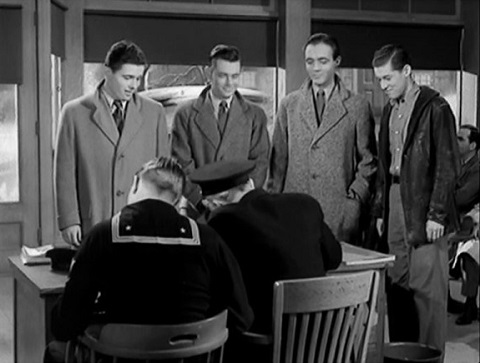
The five Sullivans were Irish-American brothers who were born in a small Iowa town and grew up during the Great Depression. Their father Thomas (Thomas Mitchell) worked on the railroads that went through the place, and though his sons - and daughter Genevieve - would frustrate him often, he did love them and his demeanour could best be described as benevolent tolerance. His wife Alleta (Selena Royle) made sure the home was on an even keel as long as Thomas kept at least a small amount of money coming in, and though the boys would often get into fights, with themselves and other kids, they were all goodhearted, really. But what did the future hold for them?
If you were an American in the Second World War years, you would be well aware of what happened to the Sullivan brothers, and that was the main draw for them which made this picture a very big hit in 1944 - once the title had been altered to The Fighting Sullivans, that was, to emphasise the war bravery. Yes, they went to war, and what befell them was a big influence on Steven Spielberg when he created Saving Private Ryan which shared a plot point so major that you are loath to explain it, for modern audiences would not be so aware. That said, almost every review or mention of the real-life Sullivans in the media would also mention their war experiences, and since they are responsible for an important item of legislation, this movie was a neat history lesson.
What it was not, was great filmmaking, its main boost coming from its hard-hitting ending which was both sobering and made you ponder now, so many years after the fact, how naïve both the siblings were and the military top brass were for not thinking their predicament through, and thus sparing Thomas and Alleta and the others a lot of heartache. That conclusion packs a punch even when you take into account how hokey the rest of it was, a confection dreamt up by Hollywood screenwriters to have their subject presented as adorable but tough, something for the hicks who were snapped up on recruitment drives to feel sentimental and inspired about. There was a degree of the patronising about the representation of this working-class clan that was hard to get away from, even as they were lauded.
Before we had our selling point for wartime audiences, the film was split into two, the first, seeing the boys growing up and played by little kids, including one-time child star phenomenon Bobby Driscoll whose own story was about as depressing as the person he played - without being inspiring. These constantly yammering and yelling younglings (every one uncredited) were a test on the nerves of anyone but the most indulgent of viewers, and their supposedly amusing antics took up half the movie, culminating in a stand-off between them and their father after they wreck part of their house (!). Once that's dispensed with, we see them grown in 1939 and one romances Anne Baxter only to have his relationship sabotaged by his brothers in an act of horrendously judged pranking, though it all works out, but makes you dislike them (or four of them, anyway) more than ever. Fortunately for their reputation, real life intervened in the form of the war, but real life could be desperately unforgiving. You had to be there, but be thankful you were not. Music by Cyril J. Mockridge.