Comedian Robert Benchley gets hen-pecked by his wife to visit Walt Disney studios to persuade Walt to make an animated cartoon out of Kenneth Grahame’s children’s book ‘The Reluctant Dragon.’ After dodging an overly officious studio guide named Humphrey (Buddy Pepper), Benchley wanders around the Disney offices getting an inside look at how cartoons are made. He bumbles into a life drawing class where artists are sketching a real live elephant, eavesdrops on a recording session with Clarence Nash, the voice of Donald Duck, flirts with pretty Disney staffer Doris (Frances Gifford) and sits in on a story session led by that famed animator Alan Ladd (huh?!). When Benchley finally meets Walt Disney at a screening of his latest movie, he gets a big surprise.
Part animated featurette, part behind the scenes documentary, The Reluctant Dragon was designed as a promotional item giving the public a glimpse inside the inner workings of the Disney studio and the making of their animated output. In fact the film opens with a jokey disclaimer: “any resemblance to a motion picture is purely coincidental." Unfortunately what seemed like a good idea at the time quickly blew up in Walt Disney’s face. The film made it to cinemas right in the midst of the most tumultuous event in the studio’s history: the animator’s strike that started in May of 1941. Some five hundred disgruntled animators picketed outside the studio gates and at a handful of cinemas screening The Reluctant Dragon in a series of events that would draw out a far darker side to Walt than the benevolent, genial figurehead presented here.
However, divorced from its historical context this is a very engaging and at times enlightening film sure to delight Disney fans. As shameless self-promotion goes it is a lot more charming than The Internship (2013). Supervised by Alfred L. Werker, a prolific if workmanlike director whose most notable films were The Adventures of Sherlock Holmes (1939) and the Stan Laurel and Oliver Hardy comedy A-Haunting We Will Go (1942), the live action portion of the film is well scripted and genuinely amusing. It benefits enormously from the amiable, self-deprecating presence of humourist Robert Benchley who sends himself up as a pompous, faintly lecherous, though affable oaf who bumbles from one memorable mishap into another.
For Disney animation buffs the film provides an invaluable view of the studio at the height of its artistic powers including rare on-camera appearances from such legendary animators as Fred Moore and Ward Kimball in addition to shining a spotlight on hitherto anonymous voice artists Clarence Nash (who teaches Benchley how to do Donald’s voice) and Florence Gill. We get a look at some animation maquettes made in preparation for Fantasia (1940) and Dumbo (1941) and, more surprisingly at this early stage, such future works as Peter Pan (1953) and Lady and the Tramp (1955). For those less interested in the technical side, Benchley’s misadventures also result in encounters with Casey Jones the whistling train from Dumbo, Bambi and Donald Duck in a typically fowl mood. Ho-ho. Also, who knew Disney’s ink and paint department in the 1940s held more pretty faces among the staffers than the Elite Modelling Agency? According to the reminisces of several veteran animators this was apparently true and not simply an excuse to inject a little glamour into the movie. Wow.
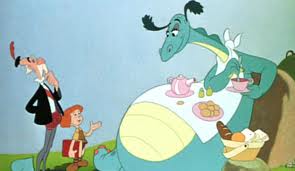
Although it is never entirely clear how Alan Ladd got to head the story department, the future star of This Gun for Hire (1942) does present and narrate the first animated segment: ‘Baby Weems’, a charming Capra-esque fable about a baby born with a genius I.Q. Told entirely through beautifully drawn storyboards with only limited animation this deceptively innocuous short segment went on to prove a huge influence on the work of U.P.A., the rival studio founded by many of Disney’s disgruntled ex-employees, in particular their seminal Gerald McBoing Boing (1951). The film also featured ‘How to Ride a Horse’ part of a series of ‘how to’ themed short subjects starring Goofy inspired by Benchley’s own Oscar-winning live action short How to Sleep (1935). Undoubtedly however the highlight of The Reluctant Dragon is the delightful animated adaptation of the titular Kenneth Grahame story. Disney would later tackle Grahame’s most famous work, ‘The Wind in the Willows’ with the flawed but interesting The Adventures of Ichabod and Mr. Toad (1949). Here though the tale of an uncommonly intelligent peasant boy who befriends an equally uncommonly genteel, non-violent (and frankly rather camp) dragon is brilliantly paced and laden with instantly likeable characters. Fundamentally a tale of misfits and non-conformists forging their own way through the world, it dilutes some of Grahame’s ideas but is genuinely very funny.




 Display comments