| |
Long before Michael Winner won renown as one of the crassest film directors around, in the wake of his megahit from 1973 Death Wish, he was a promising young talent with very definite views on what kind of movies he should be making. He was a curious paradox, generous to a fault in his private and public life alike, yet put him on a film set and he turned into a tyrant, prompting grumbles from all strata of the industry who worked with him in that capacity. Perhaps you could trace this behaviour to his beginnings as a director: his first effort in that regard was a quarter hour short that he refused to release when it got caught up in legal wrangles.
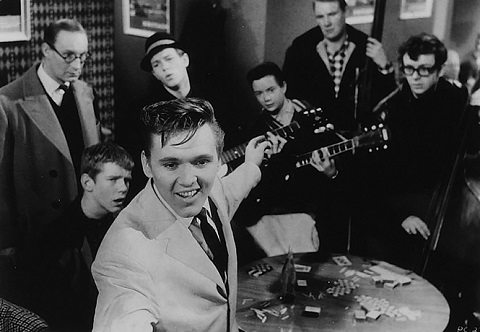 It was called The Square, a sentimental yarn from 1957 that starred the already eightysomething A.E. Matthews, a venerable old thespian of the "won't give up till the final curtain" school and apparently fond of a tipple, making him more welcoming of this tyro director placing him in his debut. The plot was simple: in a London of dilapidated buildings and bomb sites left over from the Second World War, Matthews' character was being turfed out of his home to make way for redevelopment (the dreaded "blocks of flats" were invoked, and not for the last time). He must take up residence in a retirement home, but what happens to his pet poodle? It was called The Square, a sentimental yarn from 1957 that starred the already eightysomething A.E. Matthews, a venerable old thespian of the "won't give up till the final curtain" school and apparently fond of a tipple, making him more welcoming of this tyro director placing him in his debut. The plot was simple: in a London of dilapidated buildings and bomb sites left over from the Second World War, Matthews' character was being turfed out of his home to make way for redevelopment (the dreaded "blocks of flats" were invoked, and not for the last time). He must take up residence in a retirement home, but what happens to his pet poodle?
Rest assured, there was a happy ending that did not, unlike Winner's later paean to the elderly Death Wish 3, involve a rocket launcher, but did feature a lot of skiffle as the locals put on a street party for the old geezer - he even got up and cut a rug with a young lady. It was notable that Winner put the emphasis on the youth-courting musical sequence as much as the treacly sympathy for the elderly: he was already feeling out what would be commercial, and while he would continue to give chances for a needed paycheque to many an actor, what he did with them would often be overridden by his increasingly ridiculous drive to get cinema tickets sold.
After wavering, Winner decided the movie biz was for him and he helmed a selection of further shorts, including a nudist one (why are we not surprised?), but it was in 1962 that he finally found his groove with the pop musical Play It Cool! (the exclamation mark was optional). As its title suggests, this was dated within months as The Beatles began their stratospheric rise the following year and the star of this was relegated to hasbeen status, that star being Billy Fury. There is still some debate over where he or Cliff Richard was the British answer to Elvis Presley, but the King certainly beat them both in the number of tossed off film appearances.
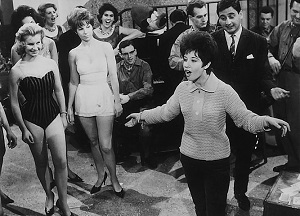 Indeed, Fury was really only in one further, notable lead, the underperforming I've Gotta Horse, where he had the chance to be nice to animals, his actual interest in life, but found his once adoring audience had dwindled to a few diehards as the Fab Four whisked away much of his fanbase. Back in '62, on the other hand, there were plenty keen to watch - and listen to - Fury, the Liverpudlian heartthrob whose career was sabotaged by his poor health as it was the fast-changing tastes of the sixties. Therefore Play It Cool! was the next best thing to seeing him live in concert, especially when he sang so many tunes from the soundtrack album tie-in. Indeed, Fury was really only in one further, notable lead, the underperforming I've Gotta Horse, where he had the chance to be nice to animals, his actual interest in life, but found his once adoring audience had dwindled to a few diehards as the Fab Four whisked away much of his fanbase. Back in '62, on the other hand, there were plenty keen to watch - and listen to - Fury, the Liverpudlian heartthrob whose career was sabotaged by his poor health as it was the fast-changing tastes of the sixties. Therefore Play It Cool! was the next best thing to seeing him live in concert, especially when he sang so many tunes from the soundtrack album tie-in.
The plot was negligible at best, but in a nutshell Billy Universe (guess who?) and his band of fresh-faced youngsters (including future notables like Ray Brooks and Jeremy Bulloch) are trying to reach Belgium so they can compete in a Twisting contest, supplying the music to dance to. It was indicative of Winner's opportunism that the dance craze the Twist was not simply dropped into conversation as often as possible, but he had his cast and various extras performing it as frequently as he could muster, to the extent that the impression he gave was he would have directed an eighty-minute long Twisting montage if he could have gotten away with it.
Chubby Checker was the man for the Twist across the Atlantic, but either he wasn't asked or was too expensive at the height of his fame, and besides he had his own movie vehicles to be getting on with in the United States. Winner did secure an American import in the bequiffed shape of Bobby Vee, however, who appeared in the nightclub set as most of the acts did, said nightclub being The Lotus Club and Chinese-themed, which thankfully gave rise to far fewer ethnic gags than it might have done. Also there was Helen Shapiro, the teenage singing sensation as was, before she branched out into forging a successful career away from pop and into jazz.
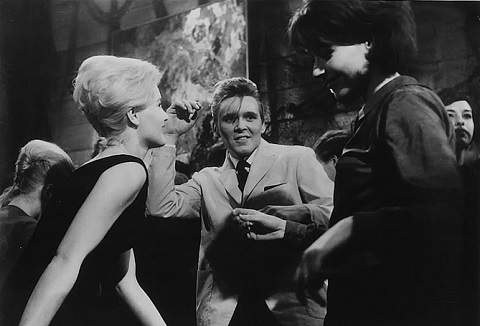 As if that were not enough, you also had Danny Williams, less well-recalled today but briefly a star, and Shane Fenton with the Fentones, who found lasting fame under the moniker Alvin Stardust come the seventies and the rise of glam rock, sort of a kitschy Gene Vincent for the golden decade of Spangles and strikes. But it was Billy's show, and Winner didn't allow you to forget it, even though there were rules of the pop musical that he did not necessarily stick to. For whatever motive, Fury did not get the benefit of love interest in his own movie, so nobody for his female fans to feel jealous towards or dreamily imagine themselves in her place. As if that were not enough, you also had Danny Williams, less well-recalled today but briefly a star, and Shane Fenton with the Fentones, who found lasting fame under the moniker Alvin Stardust come the seventies and the rise of glam rock, sort of a kitschy Gene Vincent for the golden decade of Spangles and strikes. But it was Billy's show, and Winner didn't allow you to forget it, even though there were rules of the pop musical that he did not necessarily stick to. For whatever motive, Fury did not get the benefit of love interest in his own movie, so nobody for his female fans to feel jealous towards or dreamily imagine themselves in her place.
The female lead was Anna Palk, whose career was better suited to the stage; in a sad coincidence, both she and Fury would die in their forties as ill-health overtook them. She played a celebrity who wants to marry a nasty piece of work, who is only after her money, but she cannot see that: Billy and the boys can, and spend the rest of the story trying to make her see sense, in between the songs and a dance from Lionel Blair, pulling off another impressive part. As ever with Winner, he populated the supporting roles with character actors glad of the work: Richard Wattis was a neurotic aeroplane passenger, for instance, comedian Bernie Winters as a songwriter and Jeremy Lloyd a posh clubgoer. And the bad taste he would increasingly exhibit was tempered by his youthful enthusiasm, so you did not mind too much when a girl's trousers fell down while Twisting. In all, it was a fun item of utter ephemera, capturing Fury's charisma, if not his acting talent, for posterity, and he did have a great voice.
[Network release Play It Cool! on Blu-ray with the trailer and an image gallery as extras.
Click here to buy from the Network website.]
 |


