| |
Walt Disney passed away in 1965 aged sixty-five, having built an entertainment empire from his lowly beginnings as an animator in the silent era right up to a reliable hitmaker with a list of successes as long as your arm. It may not all have been plain sailing (just ask the artists who worked for him who fancied starting a union), but with the release of the final film he oversaw, The Jungle Book, in 1967, it seemed as if his death marked the end of an era and his studio would begin to struggle. So it was, with their cheaper, live action projects and rereleases of their past glories keeping the company going, but questions were being asked throughout the seventies about whether they were a spent force, or soon would be.
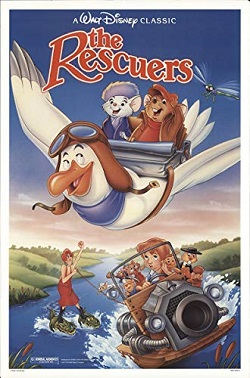 Then, ten years after The Jungle Book, they struck gold with one of the most sizeable hits of the decade, 1977's The Rescuers, a work that rivalled Star Wars for popularity in its day. Though it may have been overshadowed by the contingent of Disney fans who preferred its later, nineties sequel The Rescuers Down Under, and as a result a little neglected since its initial impact, it remains a favourite for some who enjoy how redolent of the seventies it was in terms of family entertainment. This was not a pandering effort like Robin Hood, which leaned too far on recycling what had succeeded in the films made when Walt was still alive, but something new that pointed the way for a fresh generation of animators to prove the studio still had what it takes. Then, ten years after The Jungle Book, they struck gold with one of the most sizeable hits of the decade, 1977's The Rescuers, a work that rivalled Star Wars for popularity in its day. Though it may have been overshadowed by the contingent of Disney fans who preferred its later, nineties sequel The Rescuers Down Under, and as a result a little neglected since its initial impact, it remains a favourite for some who enjoy how redolent of the seventies it was in terms of family entertainment. This was not a pandering effort like Robin Hood, which leaned too far on recycling what had succeeded in the films made when Walt was still alive, but something new that pointed the way for a fresh generation of animators to prove the studio still had what it takes.
One of those animators was Don Bluth, who ironically would reject Disney as too constricted an environment for him and some of his cohorts to be comfortable working with, and leave not long after The Rescuers did so well to establish his own company - was it any coincidence its first two endeavours, The Secret of NIMH and An American Tail, also starred mice as main characters? The fact they can scurry about at high speeds and in a state of panic makes the creatures perfect for cartoons, lending a sense of urgency to the proceedings and cute enough to appeal across the board as protagonists. And also, of course, the original Disney mascot was a mouse, Mickey Mouse, so the animals had a history of doing well for the studio.
Here the title mice were Bernard (voiced by Bob Newhart) and Miss Bianca (Eva Gabor), assigned to rescue a little girl, Penny (Michelle Stacy), who had been kidnapped by the evil, avaricious Madame Medusa (Geraldine Page, obviously having the time of her life) so the girl can be lowered into a tidal cave and retrieve a priceless diamond. There were plenty of comedy touches, like the clumsy albatross airline, or the dragonfly motorboat, but there was also a certain seriousness of tone: there was nothing funny about orphan Penny's predicament, and the songs sung by Shelby Flint reflected her peril and her heartbreaking circumstances. Add to that the earth colours which filled the frame, part of the location in a swamp, and you had what could have been downbeat buoyed by the charming relationship between Bernard and Bianca, not quite a romance, and determined to help.
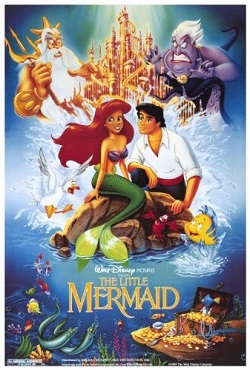 Fair enough, but come the eighties, Disney's animation wing were in trouble with a string of flops such as The Black Cauldron and Basil, the Great Mouse Detective, to the extent that their live action efforts, courtesy of middlebrow blockbuster producers extraordinaire Touchstone, were looking like the future of the studio. Could they actually give up cartoons altogether? It seemed unthinkable, but it was considered, yet the executives thought they would give their latest entry one more chance, and The Little Mermaid was born. Disney had tried to manufacture a version of the Hans Christian Andersen fairy tale decades before, but resources ran out, and besides, like a lot of Andersen's work it ended on a real downer they wished to avoid. Fair enough, but come the eighties, Disney's animation wing were in trouble with a string of flops such as The Black Cauldron and Basil, the Great Mouse Detective, to the extent that their live action efforts, courtesy of middlebrow blockbuster producers extraordinaire Touchstone, were looking like the future of the studio. Could they actually give up cartoons altogether? It seemed unthinkable, but it was considered, yet the executives thought they would give their latest entry one more chance, and The Little Mermaid was born. Disney had tried to manufacture a version of the Hans Christian Andersen fairy tale decades before, but resources ran out, and besides, like a lot of Andersen's work it ended on a real downer they wished to avoid.
However, directors Ron Clemens and John Musker had faith in what they were doing with the fable, and their secret weapon was an unashamed musical score. Disney cartoons in the eighties had tended to eschew the songs that had been so much a part of their productions before, as if embarrassed by them, though to be fair the musical was struggling in its traditional form on the silver screen this decade, and Disney were not immune to this trend. But Clemens and Musker brought in Alan Menken and Howard Ashman to truly go for it with the music sequences, with the result that countless little girls were enchanted by the movie, not only because they liked the idea of mermaids, but also because those tunes were so lacking in irony.
The Little Mermaid really believed in itself, the magic of being a mermaid, and the power of true love: Ariel (voiced and sung by Jodi Benson) was the heroine who sets her heart on a human prince Eric (she was a princess, so it was all leading up to a royal wedding if things go well). There was a spanner in the works in the shape of Ursula the sea witch, who in scary scenes (if you're under ten when you watch it) plots to turn Ariel into one of the desolate denizens of her garden of lost souls, but she is the reason the fishy female can court Eric on dry land. The message was that granting wishes always comes with strings attached, so be careful - not so much what you wish for, but how you go about attaining your heart's desire. As an aside, it was nice to hear one of Ariel's three sidekicks was voiced by Buddy Hackett, who had been a big part of their blockbuster The Love Bug.
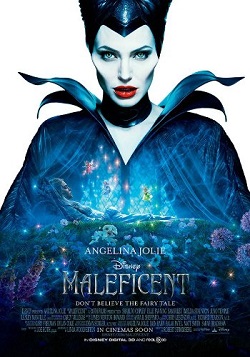 The Disney cartoon revival may have continued throughout the nineties, but come the twenty-first century it was beginning to flag again, despite making more money than ever, though its newfound tendency to produce straight to video sequels of its classic properties was rankling with their fans, especially as these cheaper efforts were not up to the standard of the originals. With their acquisition of Pixar, it appeared CGI was the way to go, which brought them to their live action arm where The Pirates of the Caribbean became a massive success in 2003, itself based on one of their theme park rides rather than the fifties version of Treasure Island (well, maybe a bit). But the video sequels had given them an idea: revamp old movies, and Maleficent started that trend. The Disney cartoon revival may have continued throughout the nineties, but come the twenty-first century it was beginning to flag again, despite making more money than ever, though its newfound tendency to produce straight to video sequels of its classic properties was rankling with their fans, especially as these cheaper efforts were not up to the standard of the originals. With their acquisition of Pixar, it appeared CGI was the way to go, which brought them to their live action arm where The Pirates of the Caribbean became a massive success in 2003, itself based on one of their theme park rides rather than the fifties version of Treasure Island (well, maybe a bit). But the video sequels had given them an idea: revamp old movies, and Maleficent started that trend.
With a vengeance, as live action (though CGI animation-filled) remakes of the Disney favourites of yesteryear made the studio the most prosperous entertainment corporation in the world, notably having acquired franchises such as Marvel and Star Wars. Going back to Maleficent, and being aware of how long these projects took to come to fruition, it was obvious a template was adhered to that was a "one size fits all" approach, mostly in how they stuffed every inch of the frame with their computer graphics. In this film, there are times when you wonder if any actor was performing in any one scene with anyone else, since they almost all look to have been shot separately so they could be subjected to massive amounts of refashioning through technology.
As for the plot, they stated outright at the beginning of the movie that this was a revisionist version, so expect some changes. The biggest change was that Maleficent, one of the most formidable villainesses of the Disney canon and the real highlight of 1959's Sleeping Beauty, was now a goodie rather than a baddie, who may place a curse on the baby Princess but didn't mean it really. Angelina Jolie may have been inspired casting on paper, but in effect she was too soft centred to make the role her own. Not helping was the femme-positive air meant the men were reduced to stooges or the real bad guys, as Sharlto Copley adopted a dreadful Scottish accent to render the King a nasty piece of work as Maleficent replaced him as Aurora's parental figure. It was a major missing of the point, a fumbling of a great character - and an enormous hit that Disney emulated to varying degrees of success into the twenty-twenties, a sequel, Maleficent: Mistress of Evil showing up in 2019. This was a formula that was going great for them, but the question arose, what happens when they run out of remakes? Original ideas are nice too, Mickey. |


