| |
The Dark Crystal may not be the most famous, even celebrated, of fantasy films, but artist Brian Froud's intricate designs have ensured it collected a dedicated following of fans of all ages when Jim Henson and Frank Oz, fresh off their hit television series The Muppet Show and its spin-offs, brought it to the big screen. It was by no means a huge hit, probably thanks to it being a niche interest, even in the wake of Star Wars as puppetry meant there were no people to be seen in the production, just their voices heard, but the sheer ambition of its creation was sufficient to generate a cult of buffs who loved how it wished to immerse you in its world.
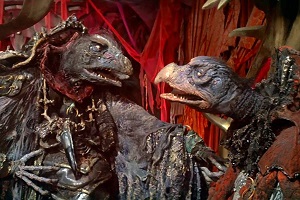 Though there was no sequel forthcoming, it was not for want of trying, and Froud was not finished with his concepts, creating comic and picture books dedicated to the premise to keep it alive in the minds of those fans, not that they kept them in the minds of the uninitiated which numbered most of the public, and The Dark Crystal, the film, began to dwindle in the popular imagination. Then, the Henson Company managed to secure funding for their long-in-gestation sequel, except it grew in the production to be a whole television series, brought to the screens on the Netflix service which had the deep pockets required to allow the ideas to expand and breathe. Though there was no sequel forthcoming, it was not for want of trying, and Froud was not finished with his concepts, creating comic and picture books dedicated to the premise to keep it alive in the minds of those fans, not that they kept them in the minds of the uninitiated which numbered most of the public, and The Dark Crystal, the film, began to dwindle in the popular imagination. Then, the Henson Company managed to secure funding for their long-in-gestation sequel, except it grew in the production to be a whole television series, brought to the screens on the Netflix service which had the deep pockets required to allow the ideas to expand and breathe.
Those fans were in heaven: here was almost ten hours (most of the ten episode run were fifty minutes or so in duration) of the same meticulous design, made with all the money they needed, but were those less familiar with the property going to be as bowled over? And were those who were sceptical about it in the first place going to be as impressed? After all, away from the fanbase there was a consensus that it the 1982 film was an artistic marvel, yet everywhere else it was rather lacking, especially in the story department. To head off those misgivings at the pass, the Henson Company produced the 2019 series as a prequel to the original.
This meant all those semi-classic character concepts and art design could be reused, so at least the audience would recognise what was going on, even if they were only on nodding terms with the Gelflings or Skeksis - the source had ended with the turmoil well and truly over, as well, so you can understand why there was probably nowhere else to go after that conclusion. However, while there was always that sense that the plotting back in 1982 had been in total service to presenting the puppetry instead of the other way around, the fact was that despite the longer amount of time to play with, Age of Resistance, as the prequel was named, suffered the same issues.
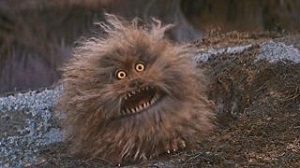
The plot laid the groundwork for the original, which offered the strange experience of watching it, knowing how it was going to end, and depending on when you first saw that first outing, knowing how it was going to unfold for years, even decades. Aware of this, there were plenty of callbacks (call-forwards?) to the '82 effort, with the same villains, the Skeksis, and the same heroes, the Gelflings, assisted by various little Podlings and the witch Aughra, who is determining what is going on cosmically for much of the time, sidelined on top of a mountain. Rest assured, Fizzgig aficionados, the furballs are back as well.
 The Skeksis are beginning their harvesting of the Gelflings for their life essence to sustain the twisted, vulture-like villains' immortality, but not all the Gelflings are aware of what is going on, so we have a band of hardy adventurers trying to spread the word: here, at least, there was some dramatic tension. Yet as before, the series overestimates how appealing their hero race is, and they are the weakest in terms of looks of the whole raft of characters, no matter that the females can fly and do a lot more taking to the air this time around, considering it was a throwaway detail in the original; more interestingly, the Gelflings operate as a matriarchy. The Skeksis are beginning their harvesting of the Gelflings for their life essence to sustain the twisted, vulture-like villains' immortality, but not all the Gelflings are aware of what is going on, so we have a band of hardy adventurers trying to spread the word: here, at least, there was some dramatic tension. Yet as before, the series overestimates how appealing their hero race is, and they are the weakest in terms of looks of the whole raft of characters, no matter that the females can fly and do a lot more taking to the air this time around, considering it was a throwaway detail in the original; more interestingly, the Gelflings operate as a matriarchy.
Or at least they did until the Skeksis dominated, so there was a downward slide into oppression in the storyline, no matter that the rebellion begins to snowball. Another aspect amplified from the source was the emotion of disgust: the bad guys got up to all sorts, from bursting their pustules and pulling off a fingernail to having a triple-streamed piss up against a wall, there was a lot here, maybe too much, aimed at making the audience go "ew". Not only the Skeksis either, as a living carpet of forest floor which eats anyone who steps on it was a memorably revolting concept in itself, and you wondered if they were trying to be too edgy fairly often.
Maybe they were trying to be scary: the Skeksis were the most memorable characters from the first, and part of that was down to them being intimidating, including the devious Chamberlain who was partly played for laughs. Oddly, coming from the Muppets stable, a sense of humour was not much in evidence either before or with the series, or at least not a sense of humour that was actually funny, as if Henson and his successors were consciously putting away childish things like, um, laughter in favour of a deadly serious puppet show. A shade more self-awareness would not have gone amiss, especially when the spell it sought to cast was broken too often.
Nevertheless, it seems churlish to complain about how the female Gelflings spend too much time climbing when they could just as easily fly, or how the prequel did not quite match the plot points of its predecessor, or how there was a definite whiff of the American renaissance fayre about the tone of The Dark Crystal: Age of Resistance, and that included the weak songs. The fact that something this eccentric could still command an audience, probably more in 2019 than thirty-seven years before, was actually pretty cheering in an entertainment landscape that was growing increasingly homogenized and unwilling to take risks on wild cards.
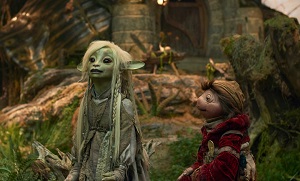 Fair enough, there was a built-in audience for this, and it was a part of the eighties obsession of the twenty-tens, and the narrative was as rote in comparison to the realisation of the world it had concocted, sub-Lord of the Rings business, but scene by scene you could see the care that had gone into it, even the love. The computer graphics were a shortcut for the screen to craft bits and pieces - movement, blinking, landscapes, lightning - that the source would have struggled with, however, and that chipped away at the handmade charm a little. If the celebrity-packed voice cast (Simon Pegg as our Chamberlain, Anya Taylor-Joy, Gugu Mbatha-Raw, Keegan Michael-Key, Toby Jones, Eddie Izzard with a terrible Scottish accent, Mark Hamill, Awkwafina, Helena Bonham-Carter, Mark Strong, Andy Samberg, Lena Headey, Natalie Dormer, Alicia Vikander, Taron Edgerton, even Sigourney Weaver and a survivor of the Henson days, Dave Goelz) rarely made much impression over saying their lines, it was the puppets you were there for: there was a reason Punch and Judy lasted. Fair enough, there was a built-in audience for this, and it was a part of the eighties obsession of the twenty-tens, and the narrative was as rote in comparison to the realisation of the world it had concocted, sub-Lord of the Rings business, but scene by scene you could see the care that had gone into it, even the love. The computer graphics were a shortcut for the screen to craft bits and pieces - movement, blinking, landscapes, lightning - that the source would have struggled with, however, and that chipped away at the handmade charm a little. If the celebrity-packed voice cast (Simon Pegg as our Chamberlain, Anya Taylor-Joy, Gugu Mbatha-Raw, Keegan Michael-Key, Toby Jones, Eddie Izzard with a terrible Scottish accent, Mark Hamill, Awkwafina, Helena Bonham-Carter, Mark Strong, Andy Samberg, Lena Headey, Natalie Dormer, Alicia Vikander, Taron Edgerton, even Sigourney Weaver and a survivor of the Henson days, Dave Goelz) rarely made much impression over saying their lines, it was the puppets you were there for: there was a reason Punch and Judy lasted. |


