Rose (Irene Miracle) is a poet who has developed an interest in the occult, specifically the legend of The Three Mothers who she reads about in an old book she borrows from an antiques shop near where she lives in New York City. According to this, these three evil spirits are in residency in three specially designed mansion houses, devised by an architect with a talent for tapping into the dark arts, one in Rome, one in Frieberg and the last where she is, New York. She goes to return the tome to the antiques dealer (Sacha Pitoëff) and confront him about the disturbing implications of what she has just pored over, but he dismisses her concerns as old wives' tales; however, Rose has taken note of its riddles and decides on further investigations...
Dario Argento's follow up to Suspiria, which it shared no characters with but thematically pursued the same lines, was the second in his Three Mothers trilogy - we had to wait decades for the third, the misbegotten Mother of Tears, which in spite of some complaining about this from some fans made it look like a masterpiece in comparison. Although it wasn't as accomplished as the previous entry, it remained notable for the final collaboration between Argento and his old friend Mario Bava, here conducting his last work on film before his untimely death that same year. Dario was suffering from a serious illness while shooting Inferno, which has had aficionados wondering how much of what we saw was his and how much was Mario's.
Dispensing with such trifles as a plot that makes sense, they piled setpiece upon suspense sequence upon gory murder to create a film that achieved the texture of a nightmare (much like Suspiria) and with those malleable rules of the dreams predominating it made its own kind of logic which seemed rational in the theatre of horror Argento made his cinematic home. Every character in it was vulnerable, in danger of being hacked, stabbed, eaten, guillotined, choked, burned, drowned - you name it, and as such after a short time it seemed they were all established not to generate audience sympathy, or even to guide us through the narrative, but to present opportunities for the filmmakers to have them expire in an extravagant fashion.
Where the whole thing really fell down is in its characters: they were fairly two dimensional to a man (and woman), either wandering around clueless or sinister and shifty. Even the ostensible hero, Rose's brother Mark (Leigh McCloskey), has little bearing on what actually happens, and the finale could quite easily have occurred without his interference so it's perhaps just as well he was absent from the screen for long stretches until he was reintroduced searching for his missing sister in New York, specifically the huge building which conceals many secrets where she was living. Reputedly inspired by the rambling, impossible location in Alain Resnais' Last Year at Marienbad, it was as much a character as the humans and demons, indeed there was a sense that the mansion was the most carefully constructed personality in the whole movie.
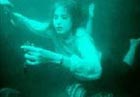
Therefore it was those setpieces that make this worthwhile as Argento and Bava truly aspired to crafting something memorable, like the underwater room that Rose dives into to retrieve her lost keys as someone advances above or the rat attack on the antique dealer which has a surprise punchline as he screams for help. Maybe because there was not much to the film except for those sequences Inferno can still come across as a little unsatisfying, particularly if you were wishing for something more solid than the hard to grasp mythology which was either too convoluted to understand with the scraps we were offered or made up as the film went along, most obviously in that abrupt wrap up of a final scene. Where it excelled, on the other hand, was making this world of the strange and dangerous appear to be encroaching on the ordinary we simply accept as normal, as if innocently turning the wrong corner - or page - would plunge you into the grip of evil forces impossible to wrangle. Keith Emerson supplied the music (well, most of it), not really a substitute for Goblin.
Italian horror maestro who began his film career as a critic, before moving into the world of screenwriting, collaborating most notably with Sergio Leone and Bernardo Bertolucci on the script of Leone's Once Upon A Time In The West (1968). Argento's first film as director, The Bird with the Crystal Plumage (1970) set the template for much of his subsequent work - inventive camerawork, sly wit, violent murder set-pieces, and a convoluted whodunnit murder plot. He perfected his art in this genre with Deep Red in 1975, before proceeding to direct the terrifying Suspiria (1977) and Inferno (1980), the first two parts of a loose trilogy of supernatural chillers that were finally completed with Mother of Tears in 2007.
Since then, Argento has pretty much stuck to what he knows best, sometimes successfully with Tenebrae and Opera, sometimes, usually in the latter half of his career, less so (Trauma, Sleepless, Dracula), but always with a sense of malicious style.